The morning my daughter was four weeks old, I noticed yellow-brown crusty patches spreading across her scalp. By afternoon I had diagnosed her with three separate conditions using Google Images. My mother laughed gently and said, “Beta, that's just baby dandruff. Rub a little coconut oil and relax.” She was right. It was cradle cap. Gone within three weeks.
Baby skin is extraordinary — thinner, more sensitive, and more reactive than adult skin, and it spends the first year of life sorting itself out. Most of what you'll see during that time is normal. Some of it looks alarming. A small amount of it actually needs attention. Here's how to tell the difference.
First, a reality check
In the first year, almost every baby will develop at least one kind of skin condition — most of them temporary, most of them harmless. Indian babies face particular triggers: heat, humidity, synthetic fabrics, harsh soaps, and the well-meaning instinct to wrap them up warmly even in summer.
The most important thing to know: a rash that would concern a dermatologist in an adult is often completely normal in a 3-week-old.
| Age | Most common issue | Typical duration |
|---|---|---|
| 0–6 weeks | Newborn acne, milia, erythema toxicum | 2–6 weeks, self-resolving |
| 1–4 months | Cradle cap, heat rash, early eczema | Cradle cap: 3–6 months; eczema: ongoing |
| 4–12 months | Contact rash, nappy rash, eczema flares | Varies; most manageable at home |
The stuff that looks scary but isn't
This is the part I wish someone had shown me before I spent an evening convinced my baby had a serious infection.
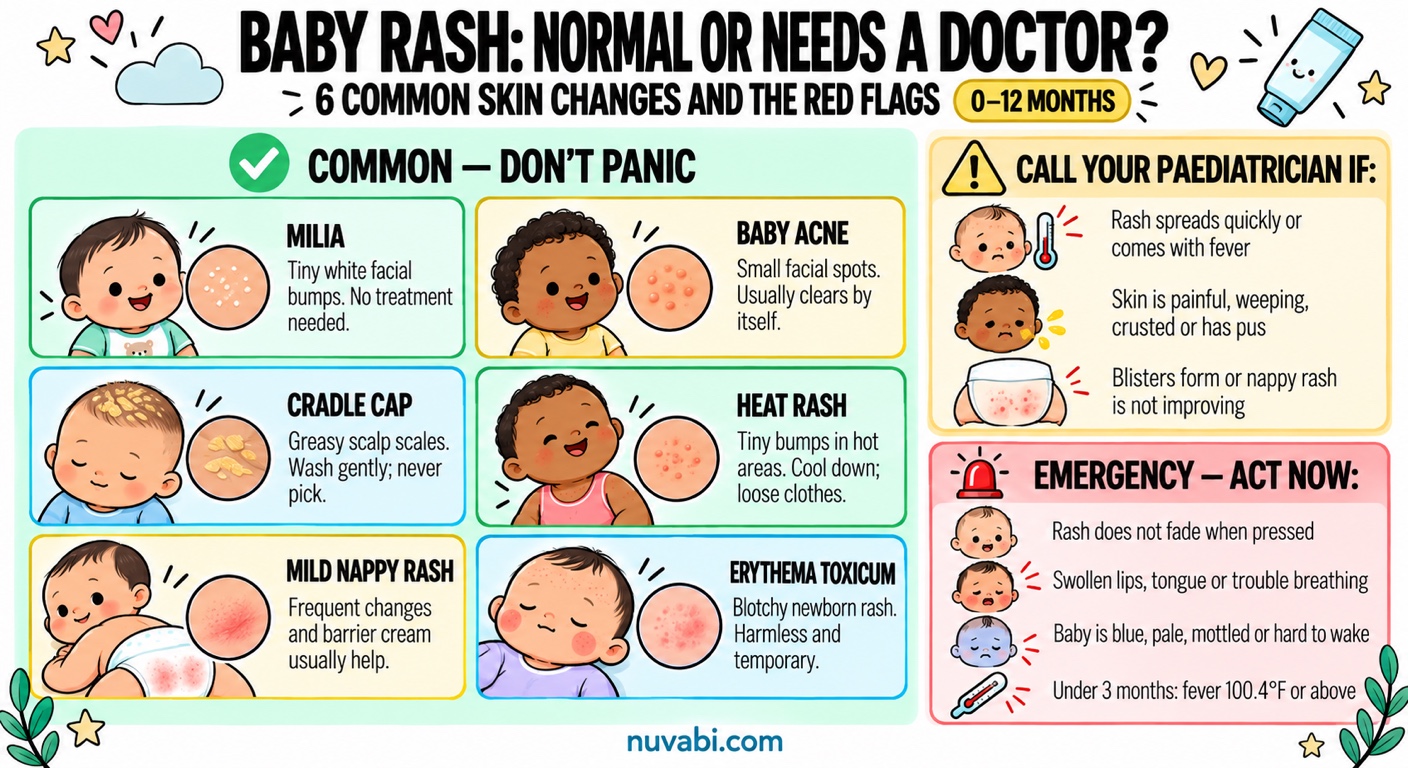
Save this guide for the next unexpected spot or rash.
✅ Normal — don't panic
- 🌡️Erythema toxicum — Blotchy red patches with small yellow-white centres in the first 2 weeks. Looks dramatic. Harmless. Disappears on its own.
- 🫘Milia — Tiny white or yellow dots across the nose and cheeks. Blocked pores. Gone within weeks without any treatment.
- 🧴Baby acne (neonatal acne) — Small red and white spots on the face, often worse after a hot bath. Caused by maternal hormones. No treatment needed.
- 🟡Cradle cap — Yellowish-brown oily scales on the scalp. Not itchy, not painful. Coconut oil + gentle brushing + mild shampoo is all you need.
- 🌶️Heat rash (ghamori) — Tiny red or clear bumps in neck folds and back. Very common in India. Cool the baby down, loosen clothing, keep folds dry.
- 🔴Mild nappy rash — Red, tender skin in the nappy area. Zinc-based barrier cream, nappy-free time, and gentle wiping handles most cases.
When to get it checked
⚠️ Call your paediatrician within 24–48 hours if:
- Rash is spreading rapidly, especially with a fever — always warrants a check
- Eczema patches are weeping, crusted, or seem infected (warm, yellowish discharge)
- Cradle cap has spread to the face, neck, or body, not just the scalp
- Nappy rash isn't improving after 3–4 days of good home care, or blisters are forming
- Skin condition flared after starting a new formula, food, or laundry detergent — possible allergy
🚨 Go to emergency immediately if:
- Petechiae — tiny pinpoint red or purple dots that do NOT fade when you press a glass against them. This can indicate a serious infection.
- Spreading rash with high fever and baby appears unwell and inconsolable — possible serious infection
- Hives spreading rapidly with swelling of lips or face, or difficulty breathing — anaphylaxis
- Worsening jaundice (yellowing skin) after day 5 of life — needs same-day blood test
Skin care that actually works for Indian babies
Coconut or olive oil before bath, soft baby brush, mild shampoo. Never pick the scales; avoid adult medicated shampoos.
Loose cotton clothing, cool baths, calamine lotion (ask your paed first). Avoid talcum powder — inhalation risk.
Fragrance-free moisturiser twice daily (Cetaphil, Himalaya Baby). Cool baths, no fragranced soap or rough fabrics.
Zinc oxide barrier cream, nappy-free time on a clean mat, gentle wipe technique front-to-back.
Cold-pressed coconut or sesame oil. Avoid mustard oil — research shows it can irritate sensitive baby skin.
Most skin conditions in the first year are your baby's body adjusting to life outside the womb. By the time they're 12 months old, their skin will be much more settled — less reactive, more resilient, and mostly less of a midnight surprise.
You're doing better than you think. 💙
If you're ever standing in the bathroom staring at a rash that appeared since the morning feed — take a photo in good light and send it to your paediatrician. A photo with context is often enough to get an answer without an emergency visit. You don't have to guess. And you don't have to dismiss your worry just because “it's probably fine.”
Track your baby's health with Nuvabi →Sources:Indian Academy of Pediatrics — Neonatal Skin Care Guidelines (2023) · AAP (American Academy of Pediatrics) — Caring for Your Baby's Skin recommendations · National Eczema Society — Infant Eczema guidance